
Synchronizing overview from sheet...
Key Achievements
- Synchronizing achievements from sheet...
Milestones
- Synchronizing milestones from sheet...
Abstract
Minimizing invasive diagnostic procedures is a central goal in medical imaging. Perineural invasion (PNI), a critical prognostic factor where tumors infiltrate nerves, remains difficult to confirm noninvasively, as its features are often imperceptible in conventional MRI. PNI research is severely hampered by data scarcity.
Our study utilized a dataset collected over a decade at Samsung Medical Center (SMC), initially comprising 306 patients. After rigorous quality control, the final cohort included 128 T1-weighted hepatobiliary phase MRI scans, exhibiting significant class imbalance (44 PNI-positive/84 PNI-negative). To address these challenges, we present NeoNet, the first integrated end-to-end 3D deep learning framework for PNI prediction in cholangiocarcinoma that avoids reliance on radiomics or handcrafted features.
NeoNet integrates three modules: (1) NeoSeg, utilizing a Tumor-Localized ROI Crop (TLCR) algorithm; (2) NeoGen, a 3D latent diffusion model (LDM) with ControlNet, conditioned on anatomical masks to generate synthetic image patches and balance the dataset to a 1:1 ratio; and (3) NeoCls, the final prediction module. For NeoCls, we developed the PNI-Attention Network (PattenNet), which uses the frozen LDM encoder and specialized 3D Dual Attention Blocks (DAB) designed to detect subtle intensity variations and spatial patterns indicative of PNI.
In rigorous five-fold cross-validation, NeoNet outperformed baseline 3D models. By leveraging synthetic data for balanced training, PattenNet achieved the highest performance with a maximum AUC of 0.7903.
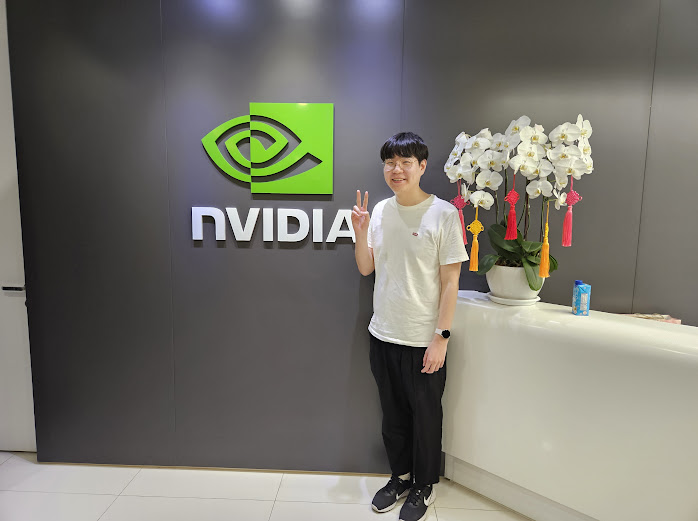
Youngung Han
Research Assistant
Youngung Han is currently pursuing the Ph.D. degree with the Department of Computer Science and Engineering, Seoul National University, Seoul, Republic of Korea. He is a Research Assistant at the Intelligent Medical Systems and Imaging (IMSI) Laboratory, where his research focuses on developing advanced deep learning architectures for medical image analysis. His research interests lie in advanced deep learning architectures for 3D medical image analysis.